Posts

Arabic present tense - fi'l mudhaari'

Image
The chart above shows the usual pattern of words used in the present tense of the Arabic language. Present tense works quite the same way as the past tense. When we use present tense in English, the verb will usually come with a pronoun. For example, ‘ he sleeps’, ‘ she helps’, ‘ they come’ etc…But in Arabic, the pronoun will be hidden in the verb. The words in grey show the hidden pronoun. (inside doer) So for example if you say يَكْتُبُ , that by itself would mean ‘he writes’. If you say يَنْصُرُ that would mean ‘he helps’. It depends on the pattern of the word. Hence it is helpful to memorize this chart and be familiar with the pattern. So that when you see for instance a word like نَكْتُبُ you would be able to recognize that the hidden pronoun is نَحْنُ and translate it as ‘we write.’ Moreover, if you are familiar with the pattern of this chart, you will be able to recite the pattern for any word given. For example if I say يَنْصُرُ you would be able to recite an...

Arabic past tense - fi'l maadhee (dhivehi)

Image
މަތީގައިވާ ތާވަލުން ދައްކައިދެނީ ޢަރަބި ބަހުގައި ނިމުނުކަމަށް ޢާއްމުގޮތެއްގައި ބޭނުންކުރެވޭ ބަސްތައް ހުންނަ ގޮތެވެ. ދިވެހި ބަހުގައި ޢާއްމުގޮތެއްގައި 'ކަމެއް' ބުނެވޭ ނަމަ އޭތި އަންނާނީ ކަންކުރާ މީހާއާއި އެކީގައެވެ. މިސާލަކަށް ' އޭނަ ނިދިއެވެ.'، 'އެމީހުން އައެވެ.'، 'އަހަރުމެން އެހީވީމެވެ.' އެހެނަސް ޢަރަބި ބަހުގައި ކަމެއް (ފިޢްލް) އެއް ބުނެވޭއިރު އެ ބަހުގެ ތެރޭގައި ކަންކުރާ މީހާ އޮންނާނީ ފޮރުވިފައެވެ. ތާވަލުގައި އަޅިކުލައިން ފެންނަމުން އެދަނީ ކޮންމެ ބަހެއްގައި ފޮރުވިފައިވި ޟަމީރެވެ. (ޟަމީރްގެ ފިލާވަޅު ބައްލަވާ) މިސާލަކަށް ހަމައެކަނި كَتَبَ ކިޔައިފިނަމަ އެއަށް އިތުރު ބަހެއް އެއްނުކުރިޔަސް އޭގެ މާނައަކީ 'އޭނަ ލިޔުނެވެ.' نَصَرَ ކިޔައިފިނަމަ އޭގެ މާނައަކީ 'އޭނަ އެހީވިއެވެ.' މާނަ އެނގޭނީ ބަހުގެ އަޑަށް ވިސްނުމުންނެވެ. އެހެންކަމުން މި ތާވަލު ހިތުދަސްކޮށް މި ބަސްތަކުގެ އަޑުތަކަށް ފަރިތަވުމުން ވަރަށް ފަސޭހަވެގެންދާނެއެވެ. އެހެނީ މިސާލަކަށް ތިބާއަށް كَتَبْنَا ފަދަ ބަހެއް ފެނުނިއްޔާ ވަގުތުން އޭގެ ތެރޭގައި ފޮރުވިފައިވި ޟަމީރަކީ نَحْنُ ކަން އ...

Arabic past tense - fi'l maadhee

Image
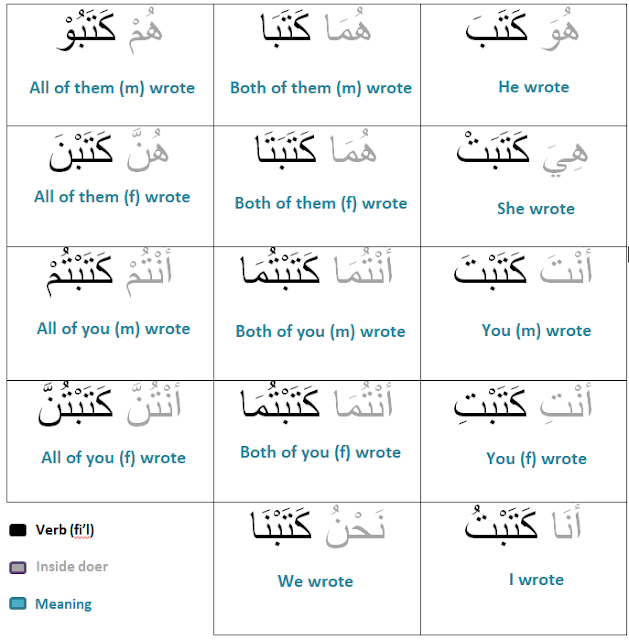
The chart above shows the usual pattern of words used in the past tense of the Arabic language. When we use past tense in English, the verb will usually come with a pronoun. For example, ‘ he slept’, ‘ she helped’, ‘ they came’ etc…But the Arabic language has this cool thing where you can say just the verb and it will have the pronoun hidden in it. The words in grey show the hidden pronoun in each word. So for example if you say كَتَبَ , that by itself would mean ‘he wrote’. If you say نَصَرَ that would mean ‘he helped’. It depends on the pattern of the word. Hence it is helpful to memorize this chart and be familiar with the pattern. So that when you see for instance a word like كَتَبْنَا you would be able to recognize that the hidden pronoun is نَحْنُ and translate it as ‘we wrote.’ Moreover, if you are familiar with the pattern of this chart, you will be able to recite the pattern for any word given. For example if I say نَصَرَ you would be able to recite and kno...

Hadhiya (part 13)

Image
"ތި އިންނަ ކުއްޖާއަށް ހުރިހާކަމެއް ފުރިހަމަ ކޮށްދޭތި. އެއްވެސް ކަމެއް އުނިވިޔަ ނުދޭތި. އަހަރުމެންނާ ދެކޮޅަށް ތިކަން ކުރިޔަސް މިރްޒާންގެ ޒިންމާދާރުކަން ދައްކަދޭތި. ބޭބެ އުޅޭހެން އަބަދުއަބަދު އަންހެނުންގެ ޝަކުވާ ލިބޭފަދަ މީހަކަށް ނުވާތި. ހިއެއްނުވޭ މިރްޒާން އިންނަން ތިއުޅެނީ ވެސް ބޭބެ އިން ފަދަ އަމިއްލަ އެދުން ބޮޑު ކުއްޖަކާ ހެންނެއް. އެހެންވީމަ މި ޢާއިލާގެ ކުއްޖެއްގެ ގޮތުގަ ފުރިހަމަ މިސާލެއް ދައްކަދޭތި." ލަތީފް މިރްޒާނަށް ބަލަން އިނދެ ނަޞޭޙަތްތެރިވިއެވެ. ބައްޕަގެ އެ ނަޞޭޙަތް އިވިގެން ދިޔުމުން މިރްޒާންގެ ލޮލަށް އުފާވެރިކަމުގެ ކަރުނަތައް ޖަމާވިއެވެ. އެހެންމީހަކަށް ނުވިސްނުނަސް ބައްޕައަށް ކޮންމެވެސް ވަރަކަށް ވިސްނުނުހެން ހީވި ވަގުތު އޭނައަށް އުފާވެރި ދިރިއުޅުމެއް ލިބުމަށް ދެން އެއްވެސް ހުރަހެއްނެތް ހެން މިރްޒާނަށް ހީވިއެވެ. ބައްޕަ އެތަނުން ތެދުވެގެން ދާން ފެށުމުން މިރްޒާން ބައްޕައަށް ގޮވާލިއެވެ. އަދި ބައްޕަ މަޑުކޮށްލުމުން ތެދުވެގެން ގޮސް ބައްޕަގެ ގައިގައި ބައްދާލިއެވެ. މިރްޒާނަށް ނޭނގުނު ކަމަކީ އެވަގުތު އޭނައަށް ޙަސަދަވެރި ލޮލެއް އަމާޒުވެފައިވިކަމެވެ. އެމީހަކު ރުޅިވެރި މޫނަކ...

Hadhiya (part 12)

Image
އެހެނެއްކަމަކު އޭގެ މާނައަކީ ފާފަ ފުއްސެވުމަށް އެދި ﷲ ގެ ޙަޟްރަތުގައި ދުޢާ ދެންނެވުމުން ﷲ ރިޒްޤު ތަނަވަސްކޮށްދެއްވާ ވާހަކައެވެ. އެ ބަސްތައް ހަނދާންވެގެން ދިޔަދިޔަހެން ފުރަތަމަ ފަހަރަށް ﷲ ހަނދުމަކޮށް މިރްޒާންގެ ލޮލަށް ކަރުނަތައް ޖަމާވީ އެކަލާނގެ ބަސްފުޅުގެ ޙައްޤުކަމާއި އެކަލާނގެ ވަޢުދުފުޅުތަކުގެ ތެދުކަން އިޙްސާސް ކުރެވުމުންނެވެ. އޭނަ ތައުބާވިތާ މާ ގިނަ ދުވަހެއް ނުވަނީސް އޭނައަށް މި ލިބުނީ ހާދަ ގިނަ ރިޒްޤެކެވެ. އޭނަ މި ހުރިހާ ދުވަހު ވެސް ފަސްދިނީ ހަމަ މި ކަލާނގެއަށްތޯ ހިތަށްއެރި ވަގުތު އޭނައަށް އިތުރަށް ރޮވުނެވެ. އޭނައަކީ ދުވަހަކުވެސް އެކަލާނގެ މަގުން އެއްކިބާވެގެންވާ މީހެއްކަމުގައި ނުލެއްވުމަށް އެދި އެވަގުތު ހިތާހިތުން ދުޢާކުރެވުނެވެ. އެދުވަސްފަހުން މިރްޒާން ކެތްތެރިކަމެއްނެތި އޭނަގެ ކައިވެނީގެ ވާހަކަ ދެކެވޭނެ ދުވަހެއްގެ އިންތިޒާރު ފެށިއެވެ. އަމްނާ ވެސް އެދުވަހަށްޓަކައި ކެތްމަދުވެފައިވިކަން އޭނައަށް އެނގުންވީ ، ދުރުން ހިނގާފައި ދާއިރު އޭނައާއި އަމްނާގެ ހަތަރުކަޅި ބަދަލުވާ ކޮންމެ ފަހަރަކު އެ މޫނުމަތިން ލަދުރަކި ހިނިތުންވުންތައް ފެންނަމުން ދިޔަ ގޮތުންނެވެ. އެ މަންޒަރު ފެންނަ ކޮން...